Why Early Assembly Testing Prevents Design Surprises
Introduction: Why Is Early Assembly Testing Essential to Prevent Design Surprises?
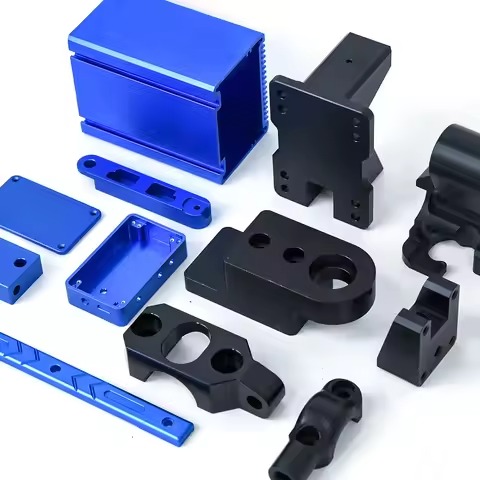
Most design issues are not caught in CAD—they emerge when real parts are assembled: interference, misalignment, sticking, looseness, or insufficient strength. Early assembly testing through rapid prototyping lets engineers validate structure and fit before production. Precision CNC machining provides an accurate geometric benchmark, while a professional CNC machining service enables real-world multi-part assembly trials that reveal potential pitfalls well ahead of mass production.
Prototype Builds Reveal What CAD Can’t Simulate: Real-World Fit, Friction, and Deformation
Tiny deformations from machining aluminum parts can create unexpected insertion challenges or fit inconsistencies. Testing with an aluminum prototype exposes real friction, stress concentrations, and assembly dead zones that would never be obvious in CAD. The behavior of different custom metal parts—like aluminum, steel, and stainless steel—varies greatly in assembly due to differences in elastic modulus, highlighting issues that only physical tests can reveal.
Multiple CNC Prototypes Expose Tolerance Stacks and Assembly Drift Over Time
Producing several parts through aluminum CNC machining ensures each prototype is highly consistent, allowing strict assembly validation. Comparative tests with multiple CNC prototypes demonstrate how tolerance chains and accumulated deviations can cause significant positional drift. With custom CNC machining, engineers can also simulate long-term use: tracking how wear, gap growth, and repeat assembly affect the fit and function of complex assemblies.
Using 5-Axis Machining for True-to-Production Prototypes and Error-Free Assembly Testing
5-axis CNC machining enables all key datum surfaces to be machined in a single setup, minimizing geometric variation between prototypes. During rapid prototyping, this process eliminates false negatives caused by fixturing or setup errors, letting engineers focus on real assembly challenges. At the precision CNC machining stage, results become almost indistinguishable from future mass production, ensuring that early test data is a reliable predictor of actual performance.
Tight Tolerance Zones: Early Testing Prevents Fit, Looseness, and Durability Issues
Tight tolerance fits—press-fits, sliding interfaces, guideways, and shaft holes—are high-risk zones for assembly failure. Early assembly tests at the CNC machining service stage reveal risks such as inconsistent insertion force, unstable fits, and premature wear or breakage. The specific properties of custom metal parts must also be evaluated, as each material responds differently to friction, force, and long-term stress in these sensitive regions.
Conclusion: Early Assembly Testing Is the Cornerstone of Reliable Design and Production
Early assembly testing is the engineer’s best tool for verifying design robustness, manufacturability, and assembly consistency. By combining rapid prototyping, aluminum CNC machining, and precision validation at every step, teams can catch and solve hidden issues before mass production. From prototype manufacturing to pre-production validation, the sooner assembly is tested, the less rework and risk—helping you avoid last-minute surprises and achieve reliable, repeatable results.
READ MORE: