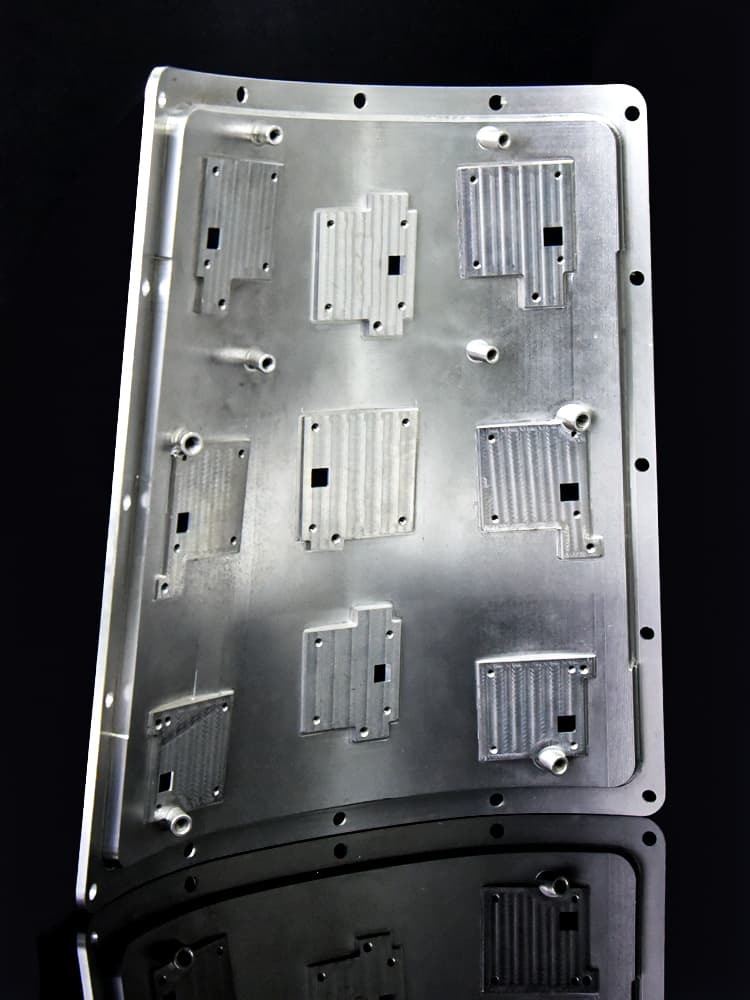
Designing Mating Features for CNC-Machined Parts
Introduction: Why Are Mating Features the Key to CNC Part Design?
Mating features are at the heart of every high-quality CNC-machined assembly, determining not only fit and function but also load paths, sealing effectiveness, and long-term reliability. During rapid prototyping, engineers gain early insight into how mating surfaces actually behave under real assembly conditions. Precision CNC machining then reveals whether designed tolerances and datums are truly consistent across batches, while a dependable CNC machining service offers the critical validation window before mass production.
Prototyping: Identifying Geometric Instability and Fit Challenges
When machining aluminum parts, especially thin-walled structures, deformation during assembly can lead to imperfect engagement or alignment issues. Aluminum prototype tests expose real-world problems such as excessive insertion force, insufficient contact area, or stress concentration at critical points. Furthermore, the behavior of custom metal parts—aluminum, steel, or stainless—can vary widely at mating interfaces, requiring engineers to fine-tune their designs for optimal performance.
Machining Limitations: Directionality, Angles, and Datum Consistency
Aluminum CNC machining of mating features—such as slots, locating steps, or sliding surfaces—faces inherent limitations when features are not machined from the optimal direction, sometimes causing discontinuous textures or angular deviations. By assembling a CNC prototype, engineers can see whether slight datum drift or setup variation leads to fit errors. Custom CNC machining across multiple units validates whether mating features can achieve repeatable, consistent engagement in practice.
Strategy: Leveraging 5-Axis Machining for Consistency and Surface Quality
5-axis CNC machining drastically reduces the need for repositioning, allowing sliding features, snap-fits, and locating steps to be finished in a single setup for the best possible geometric continuity. During rapid prototyping, this makes it easier for engineers to judge actual interface performance, while precision CNC machining in this context further enhances fit accuracy and durability, supporting the most demanding assembly requirements.
Validating Tight Tolerance Fits in Real Assemblies
Areas with tight tolerance—shaft-holes, slides, press-fits, and alignment features—are extremely sensitive to accumulated deviation. Through the CNC machining service stage, prototype assemblies reveal issues like inconsistent friction, fit variation, or unexpected stress shifts. The choice of custom metal parts is just as crucial, as material and finishing influence both initial assembly feel and long-term wear or gap changes over repeated cycles.
Conclusion: Achieving Excellence in Mating Feature Design
Outstanding mating feature design balances material properties, structure, machining strategy, and assembly dynamics. Success depends on integrating rapid prototyping, aluminum CNC machining, and precision checks at every step. From prototype manufacturing to volume production, the reliability of mating interfaces is founded on rigorous testing and smart multi-axis machining—not just geometry on paper. Engineers can further improve results by periodically building CNC prototypes to validate design changes under real-world assembly conditions.
READ MORE: